
Designing a Scalable API Ecosystem
Helping developers, businesses and partners discover, understand and integrate telecom APIs.
Product Designer · UX/UI · Product Strategy
Product Designer
UX / UI · Information Architecture · User Journeys · Wireframing · Prototyping

Telecom APIs enable powerful network capabilities, but discovering, understanding and integrating them requires navigating large amounts of technical information.
Open Gateway needed an experience that could support developers, businesses and partners without overwhelming them with technical complexity.
The challenge wasn't reducing functionality—it was reducing complexity.
3.UNDERSTANDING THE USERS
1.THE CHALLENGE
DEVELOPERS
Discover APIs
Understand documentation
Integrate capabilities
4.DEFINING THE PROBLEM
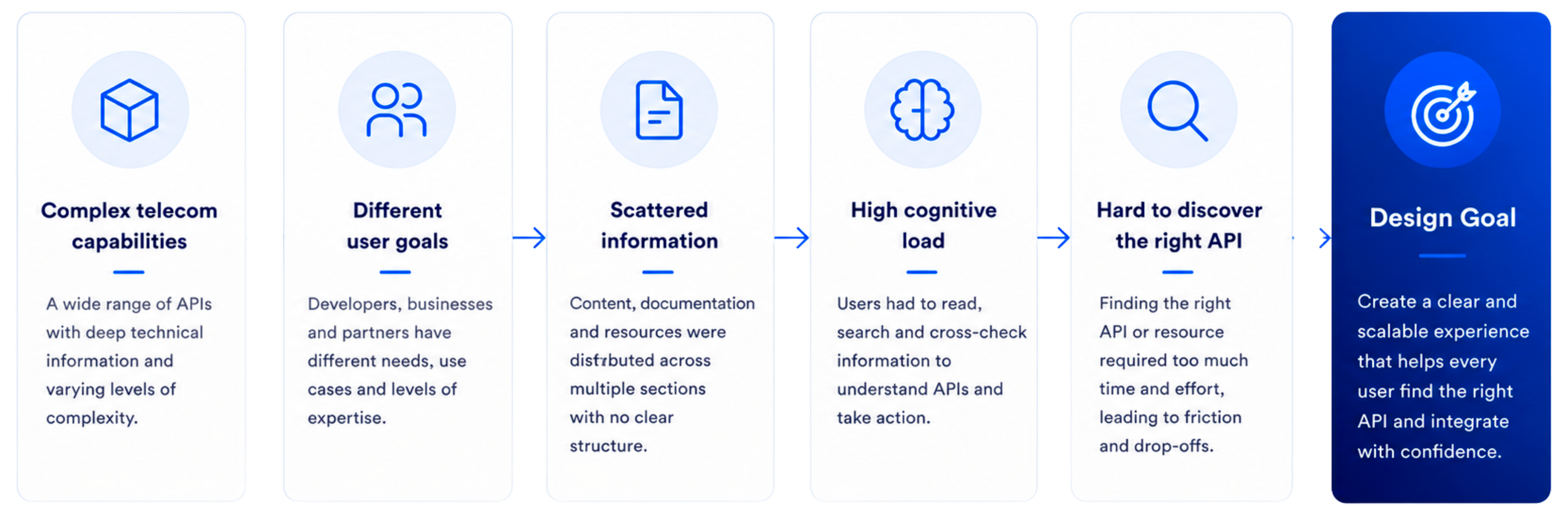
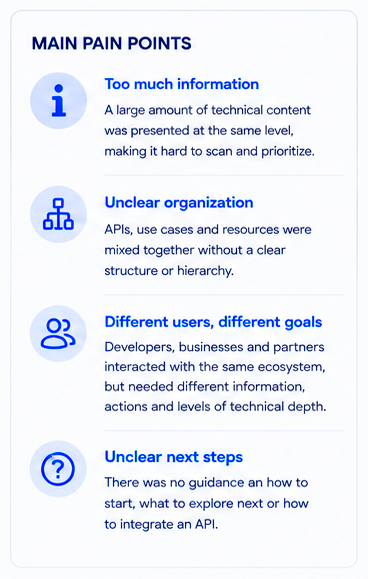
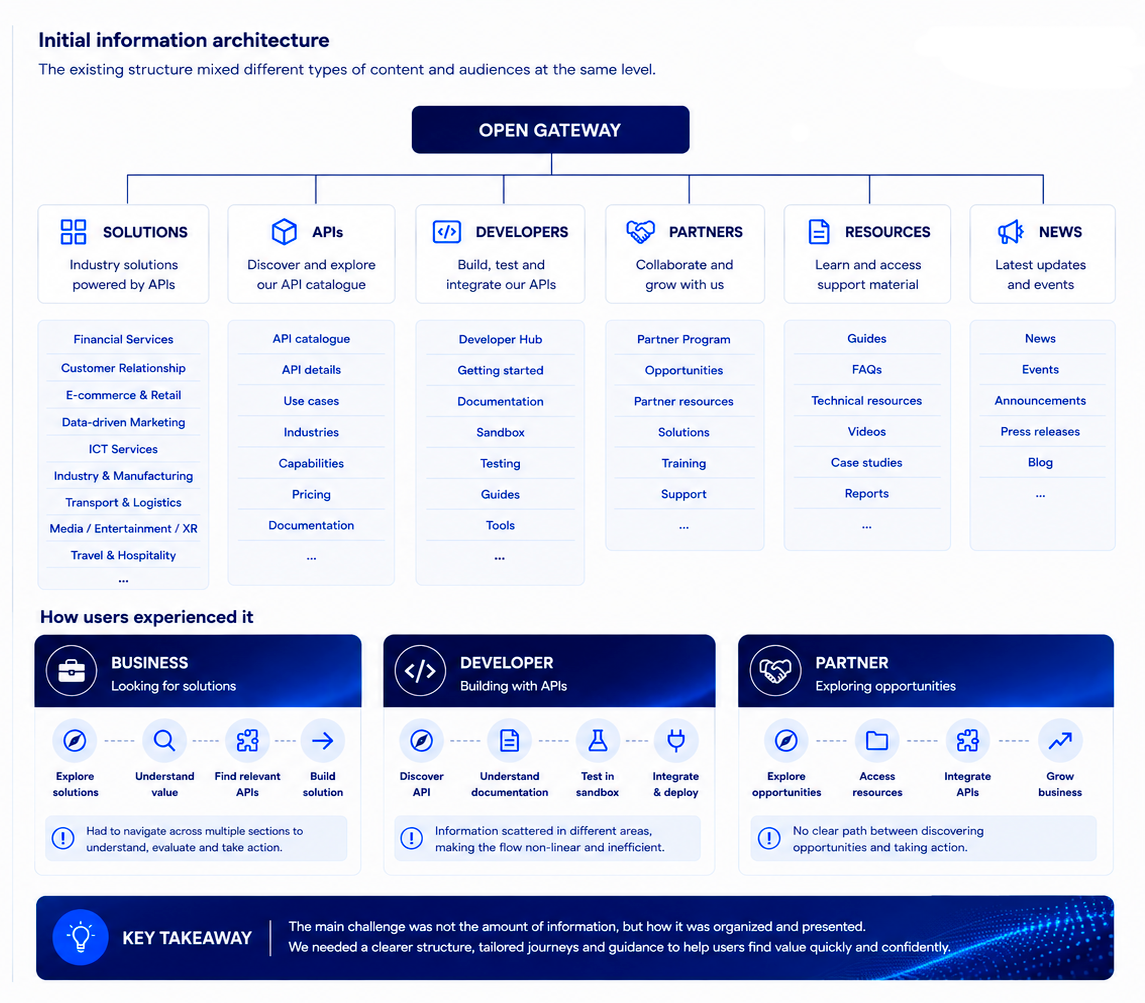
Before designing the experience, we mapped the information we needed to offer and identified the main challenges we had to solve.
The challenge wasn't the amount of information — it was how that information was organized and experienced.
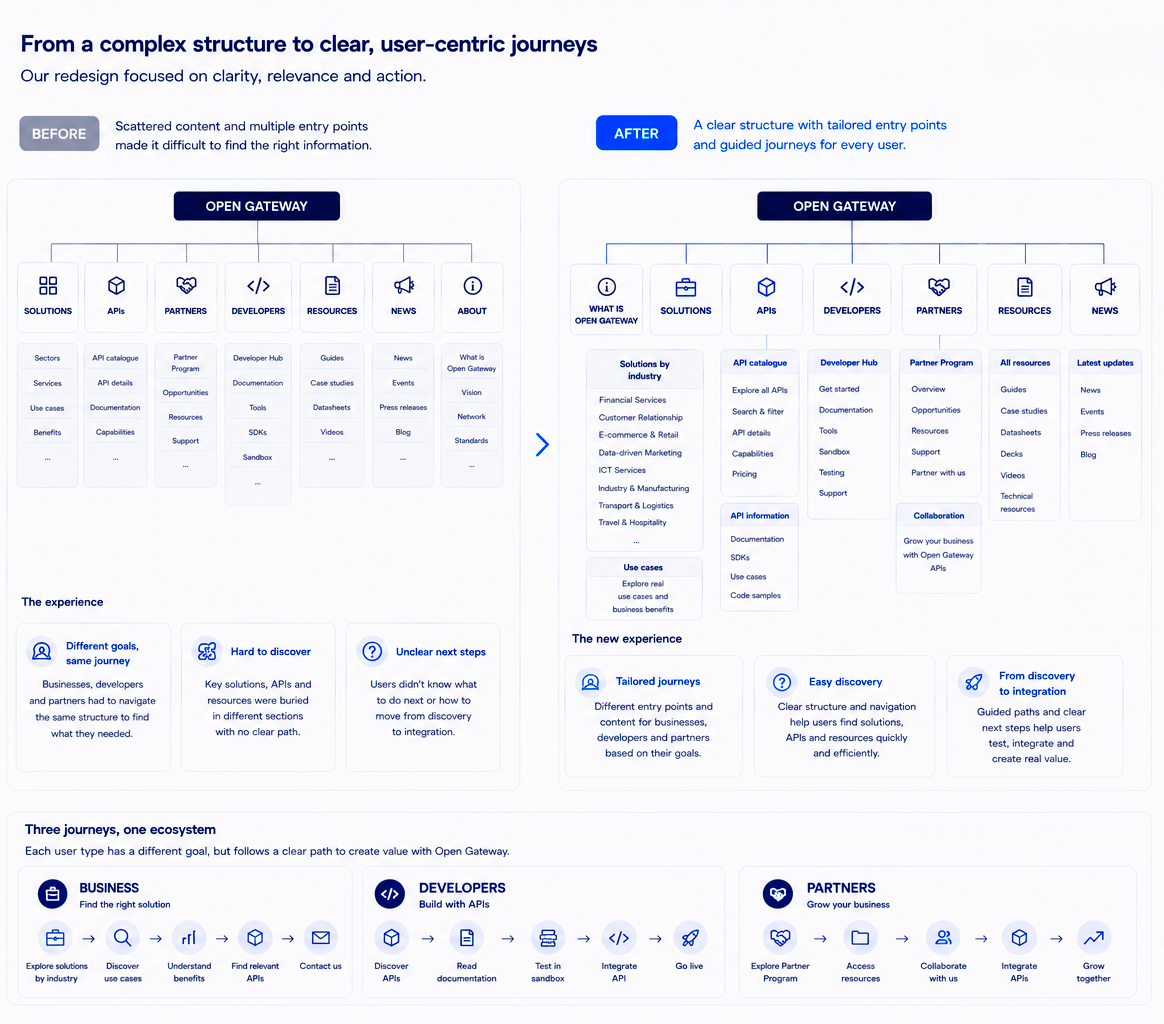
5.1THE SOLUTION / FROM COMPLEXITY TO CLARITY
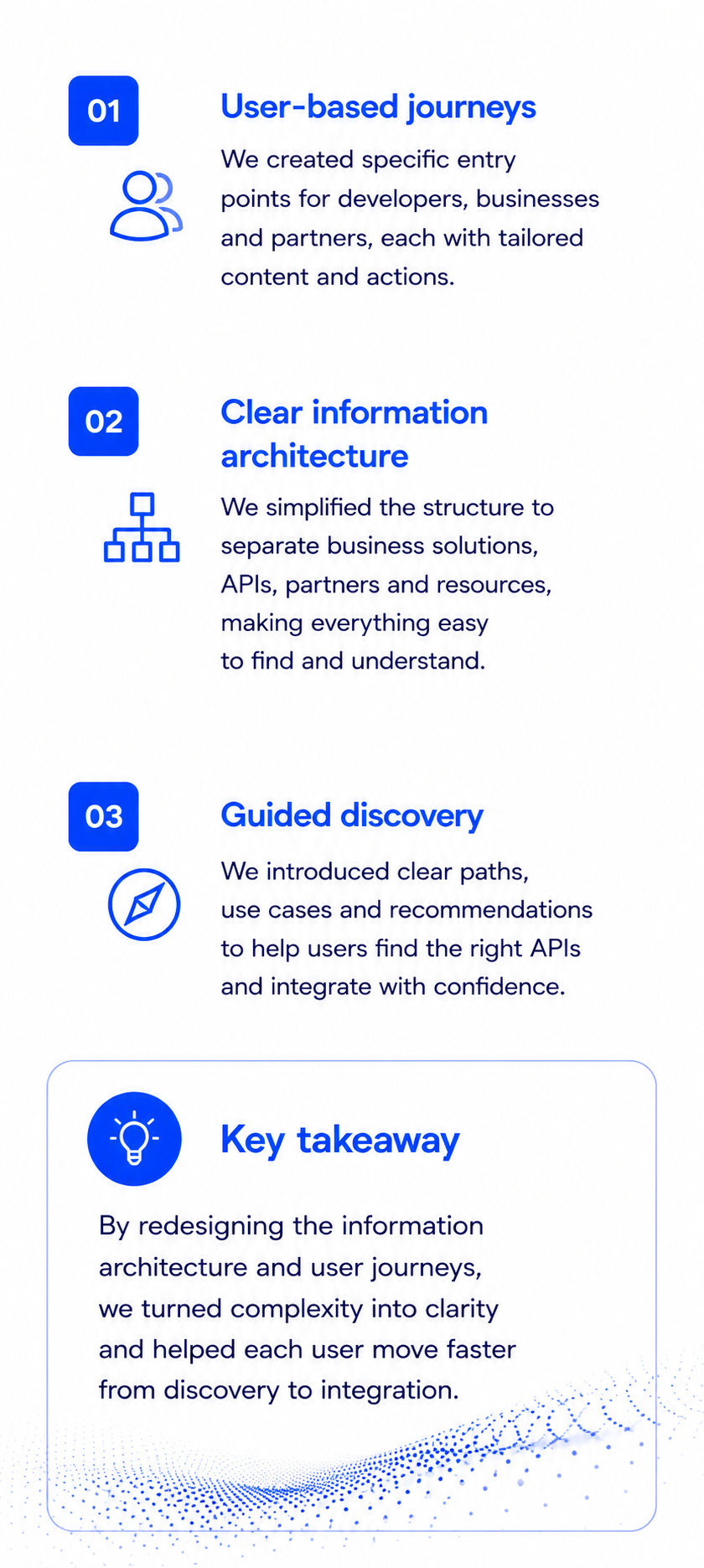
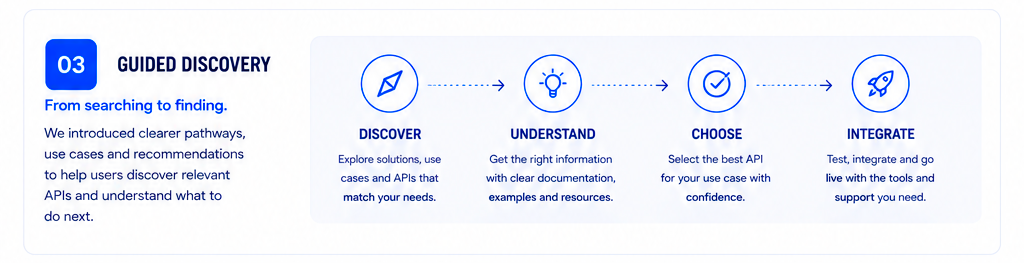
We redesigned the experience around user needs, simplifying discovery, navigation and API integration.
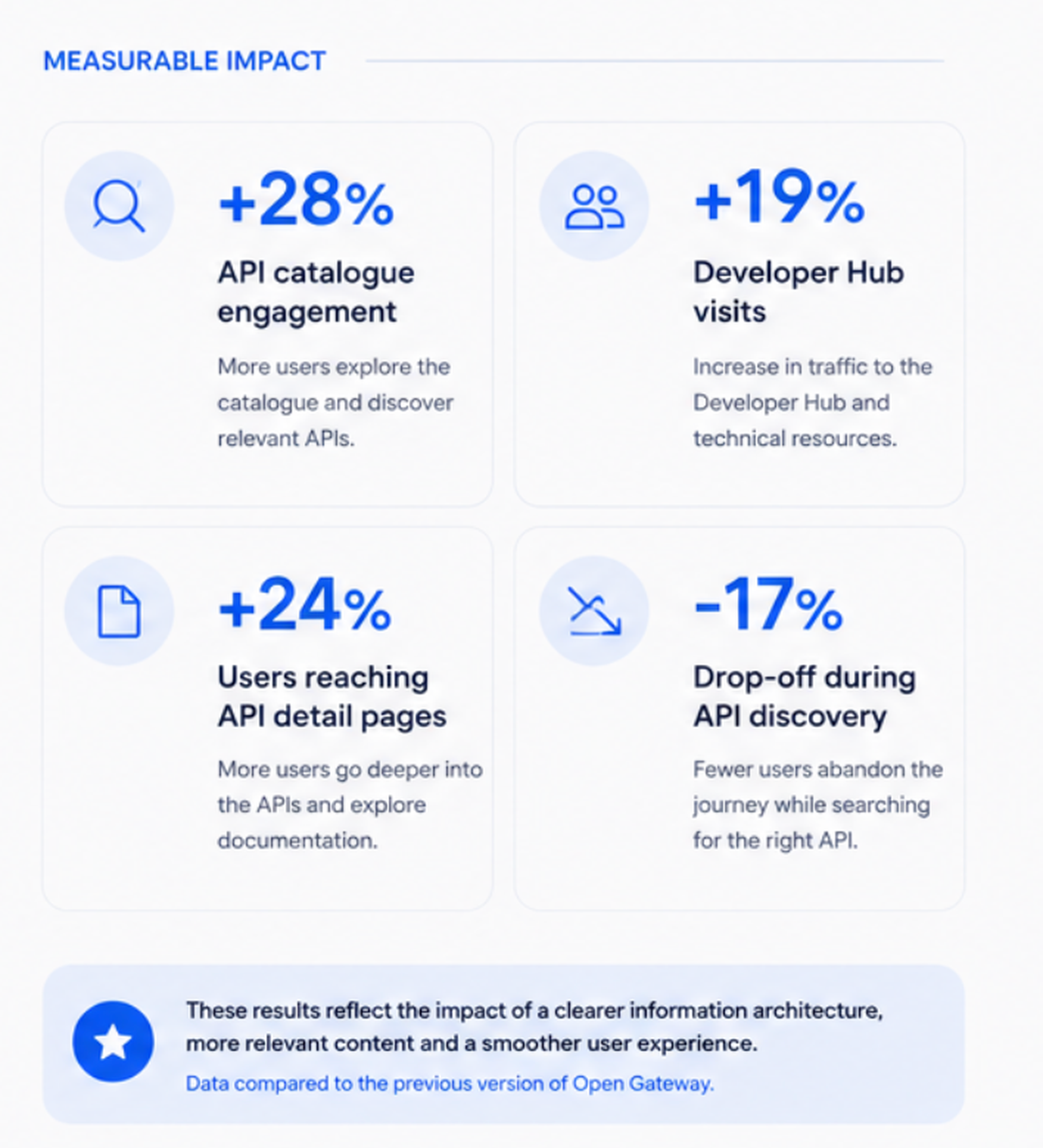
9.FROM COMPLEXITY TO CLARITY
2.UNDERSTANDING THE PRODUCT
Open Gateway is Telefónica's API marketplace, connecting businesses, developers and partners with standardized telecom network capabilities.
The platform brings APIs, use cases and technical resources together in one ecosystem, making complex network capabilities easier to discover and integrate.
-
API Marketplace for telecom network capabilities.
-
Developers, businesses and technology partners.
-
Simplify the discovery and adoption of telecom APIs.
OPEN GATEWAY
One platform.
Different journeys.
BUSINESS
Explore use cases
Understand value
Find relevant APIs
PARTNERS
Explore the ecosystem
Access resources
Build solutions
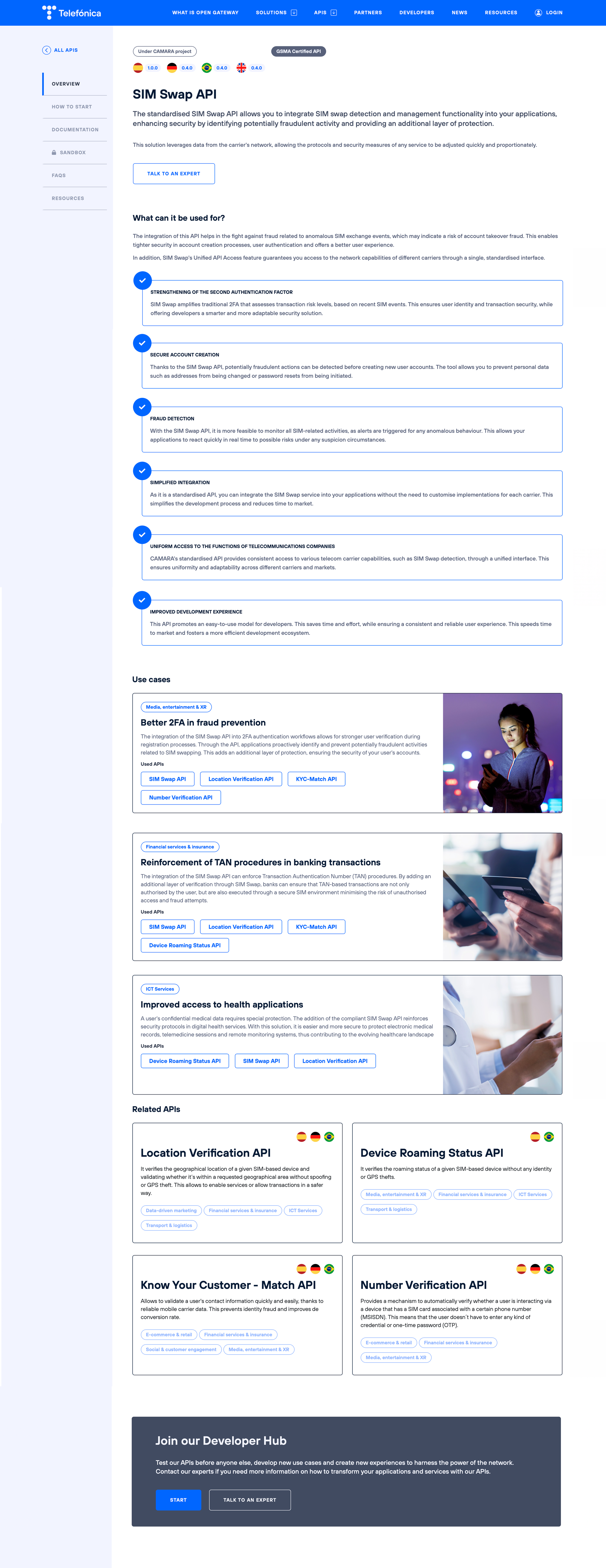
03 — API DETAIL
Helping users explore and find the API that fits their needs.

5.2THE SOLUTION / DESIGNING THE SOLUTION
6.EXPLORING THE STRUCTURE
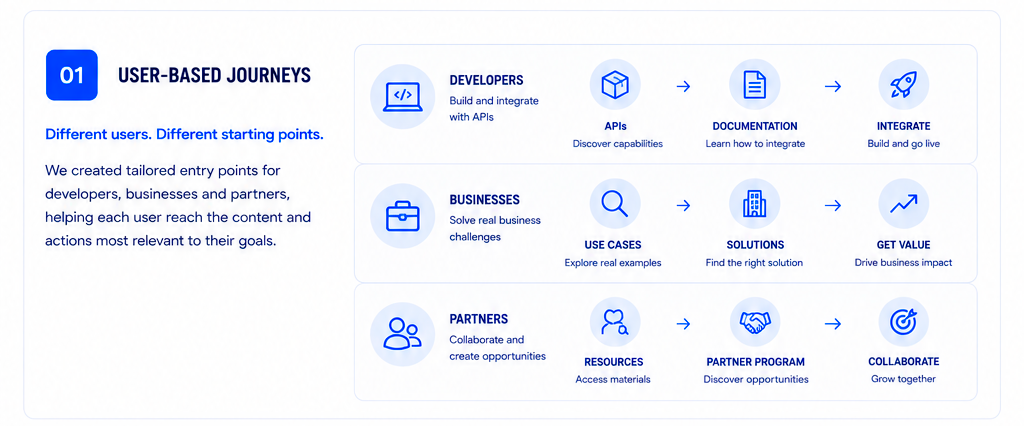
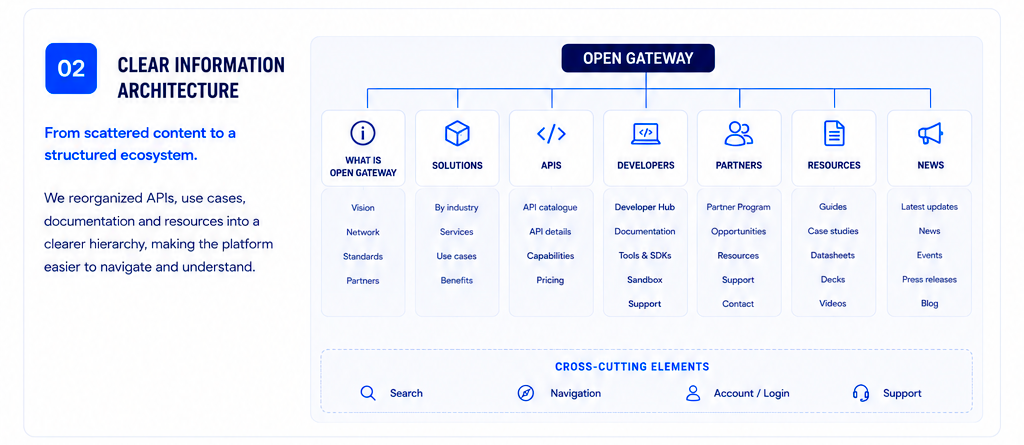
Before moving into visual design, I explored different ways to structure the experience and make complex telecom APIs easier to discover, understand and use.
The goal was not to simplify the product itself, but to simplify how people navigate and understand it.
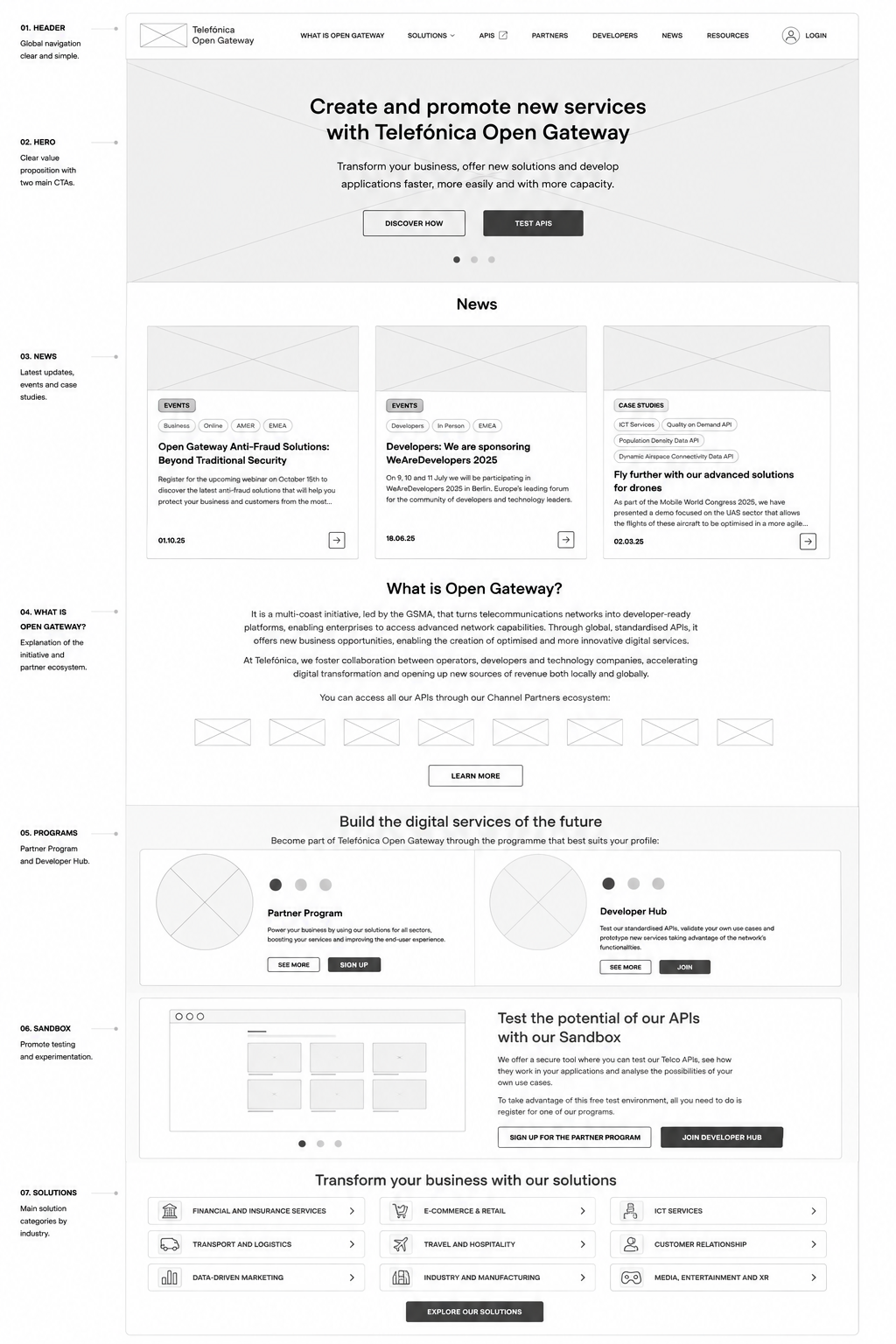
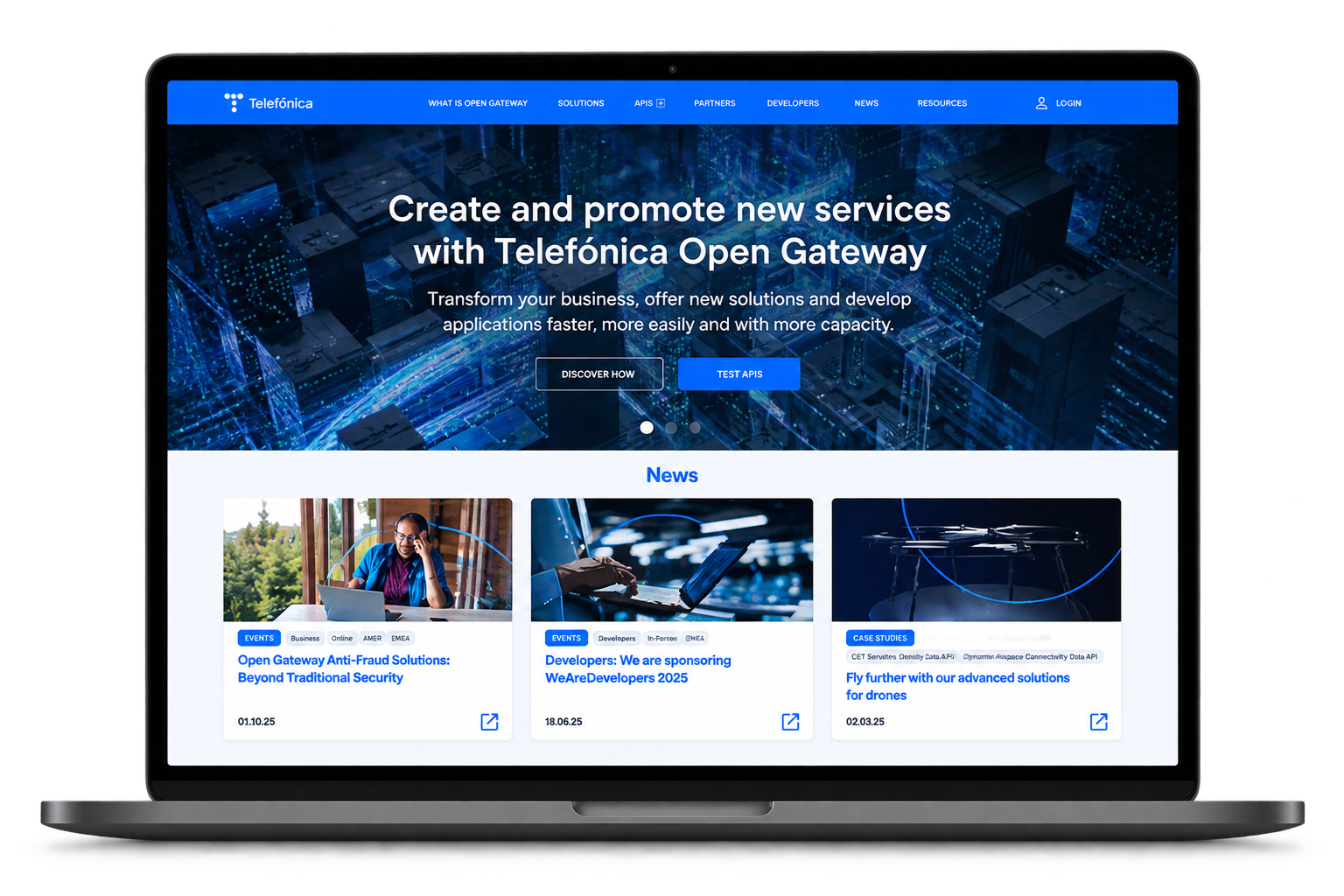
01 — HOMEPAGE
Creating a clearer entry point into the Open Gateway ecosystem.
01 — HOMEPAGE
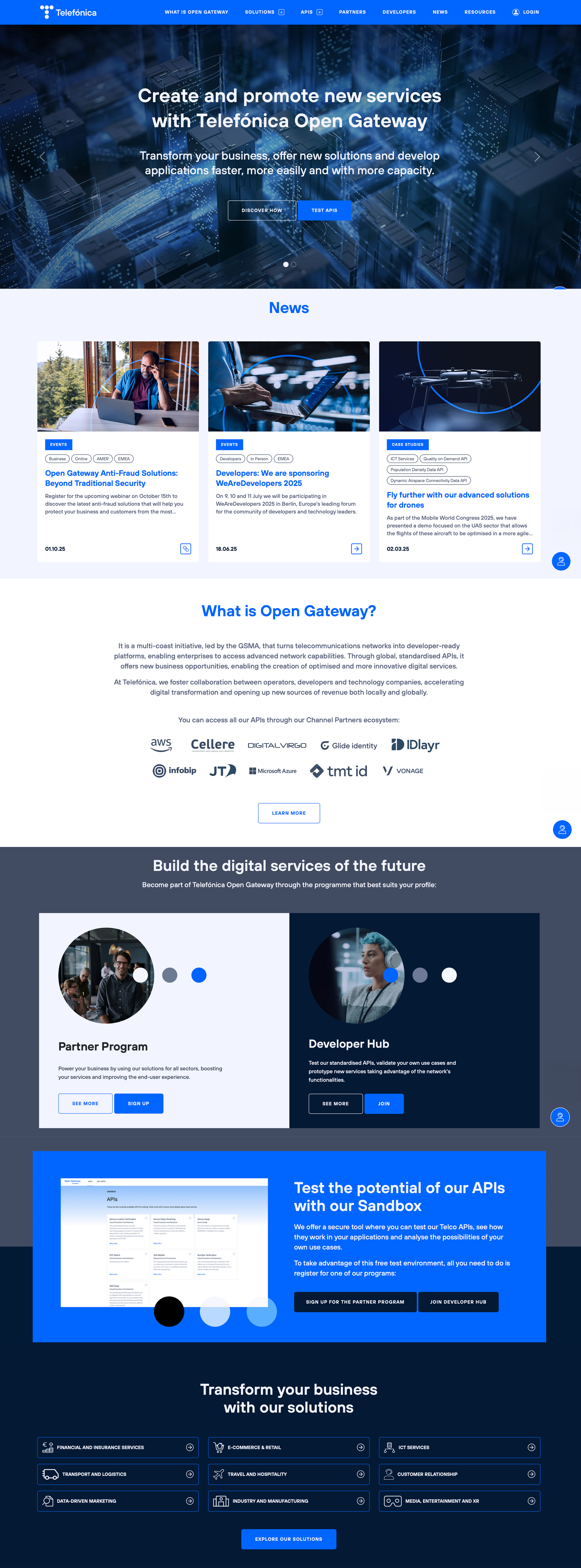
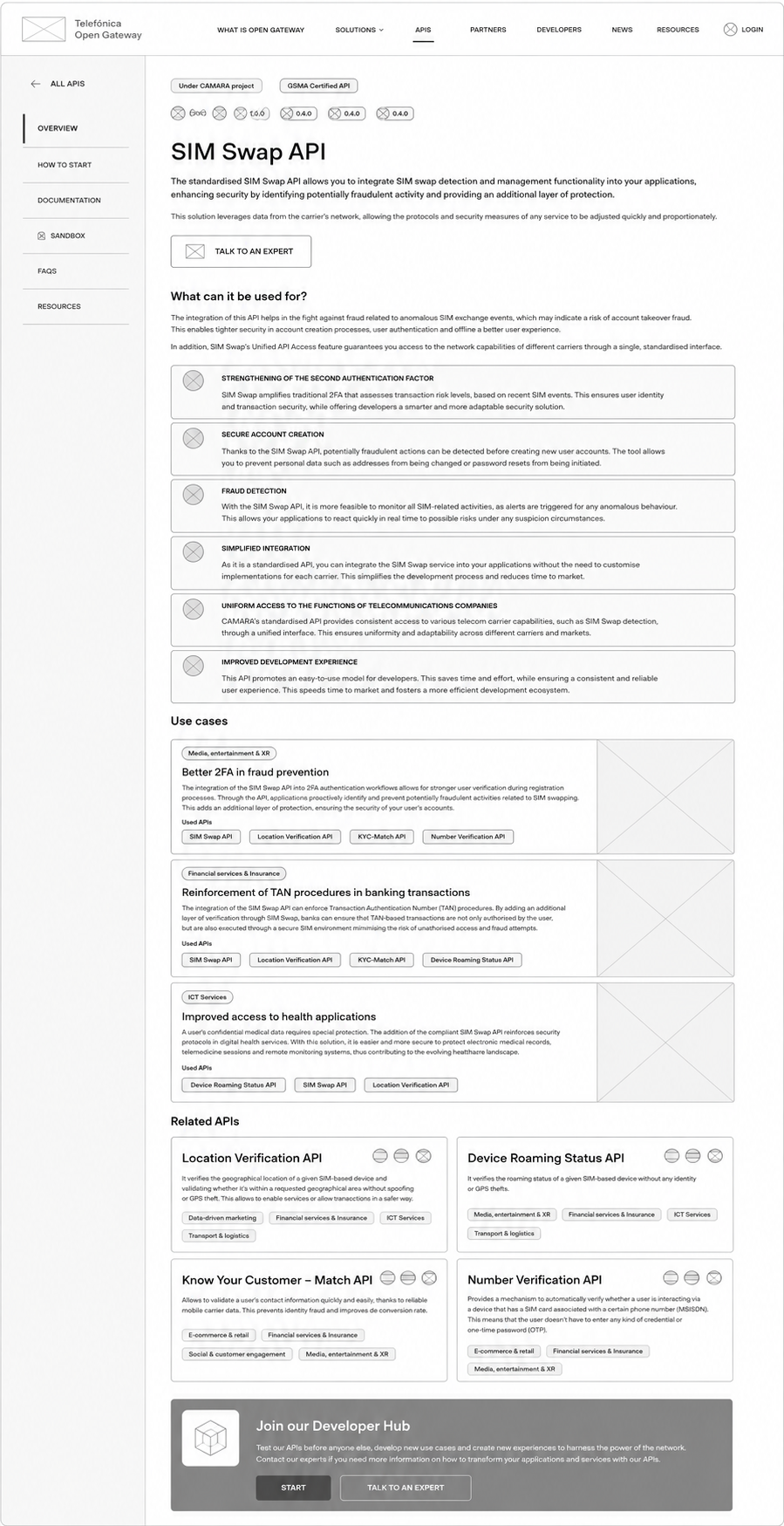
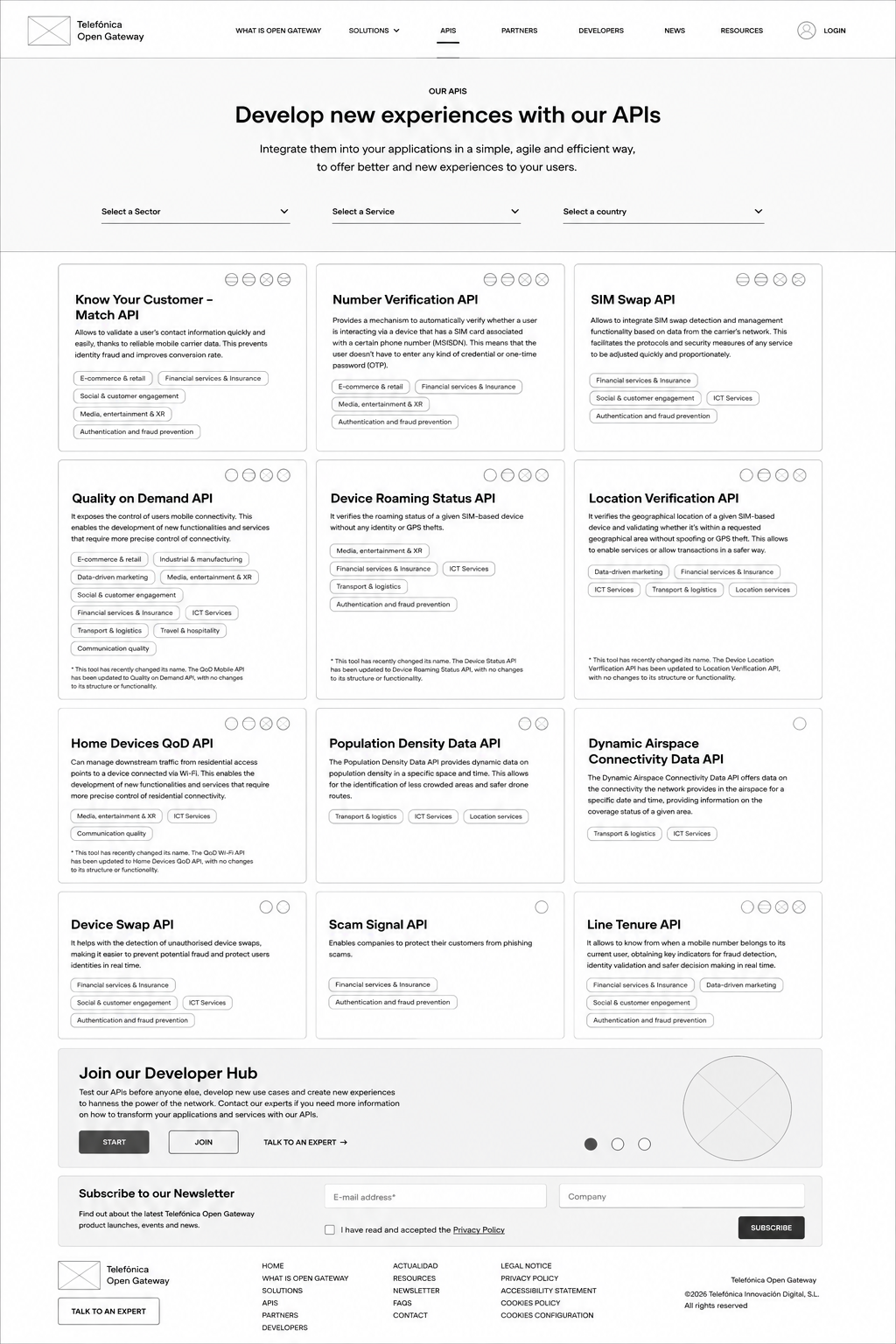
The redesign created a clearer path from discovering Open Gateway to understanding and adopting its APls.
03 — API DETAIL
02 — API DISCOVERY
Helping users explore and find the API that fits their needs.
7.DESIGNING THE STRUCTURE
02 — API DISCOVERY
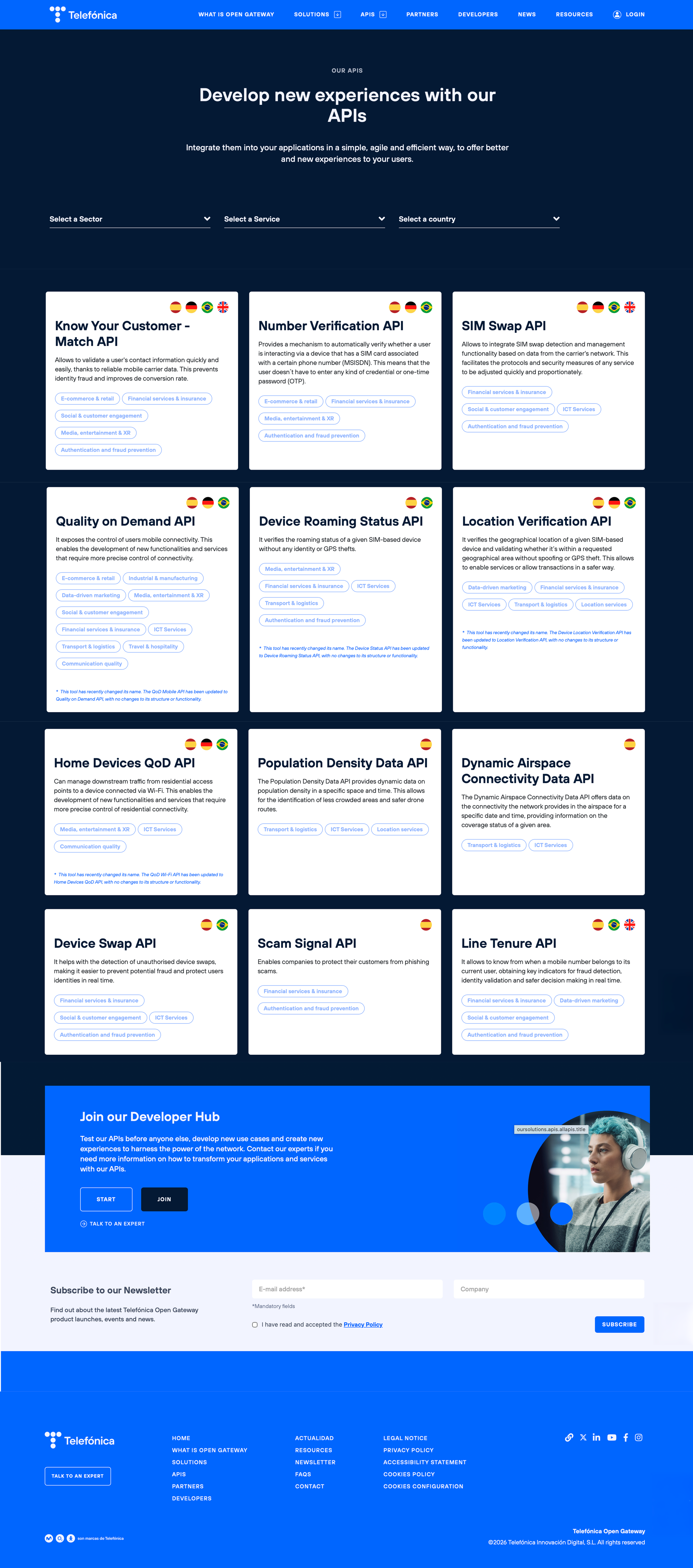
8.FINAL DESIGN
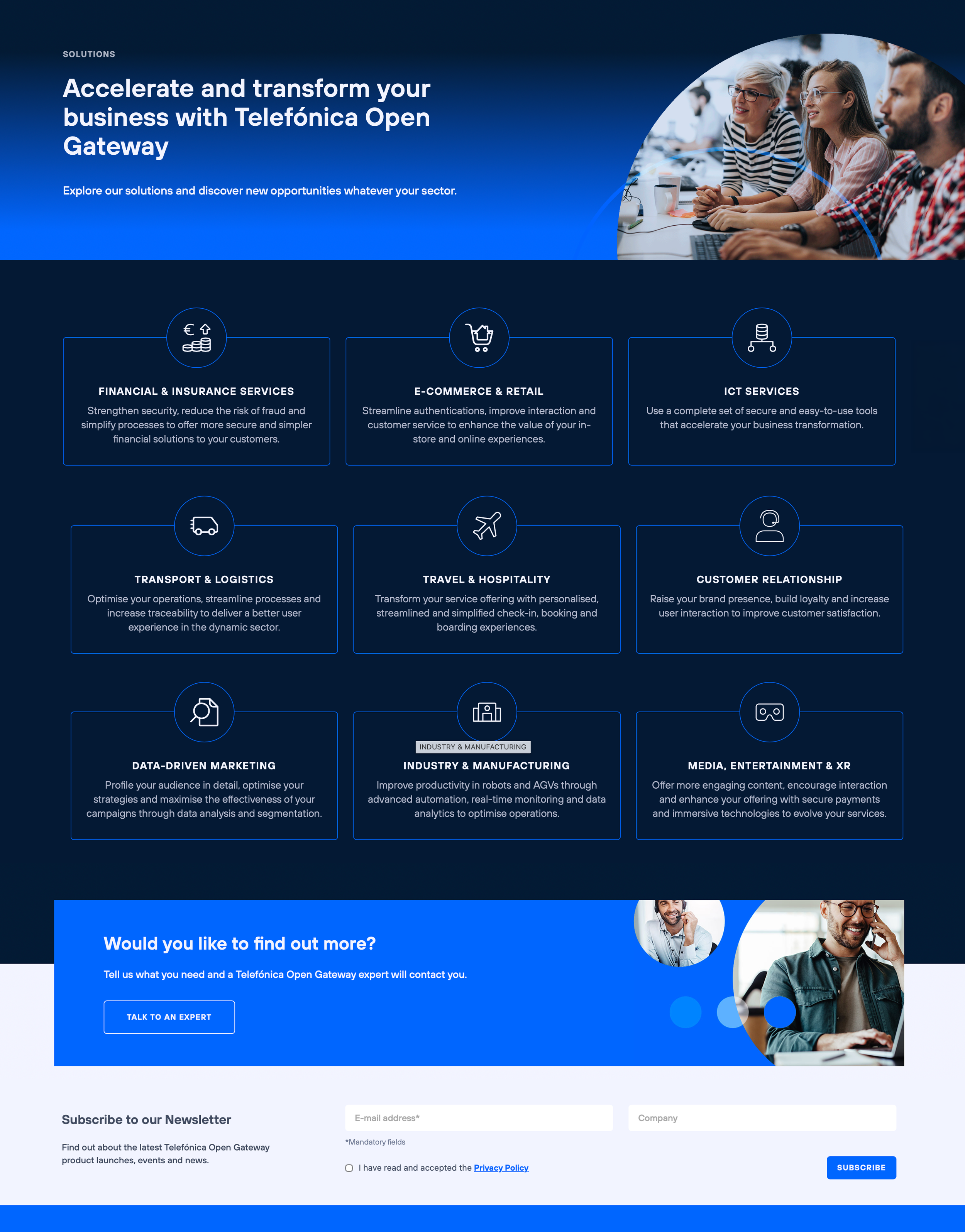
The final experience transforms a complex API ecosystem into a structured and intuitive platform that supports both technical and business users.
By combining a clear information hierarchy, task-oriented navigation and consistent UI patterns, the platform makes it easier to discover APIs, understand their capabilities and move confidently towards integration.